


The Ultimate Guide to Safe & Secure Courier Packaging
Behind every parcel that arrives intact is a small piece of craftsmanship: the packaging. Done well, it shrugs off the bumps, drops and squeezes of courier transit and delivers your goods exactly as they left you. Done poorly, it invites damage, delays and disappointed customers. This guide walks you through the art — and science — of packaging goods for safe, secure courier transit.
Key takeaways
- Packaging has four jobs in courier transit: protection, identification, security and easy handling.
- Most in-transit damage comes from movement, so right-size the box, cushion every side and fill the voids.
- Match the material to the goods: corrugated board for structure, bubble wrap or foam for fragile items, kraft paper for lighter inner wrapping.
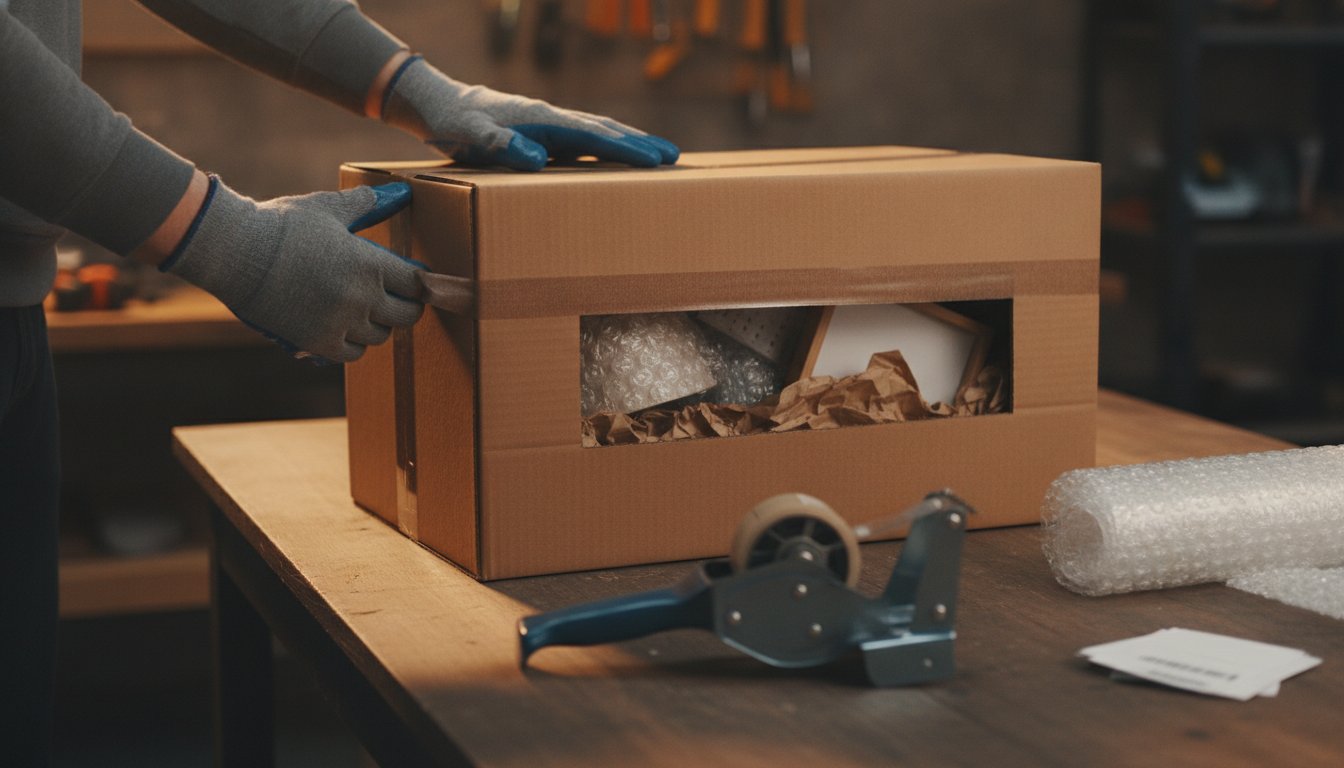
- Seal with the H-taping method and label clearly with the recipient, return address and any handling instructions.
- Recycled board, starch-based peanuts, paper tape and recyclable air pillows let you pack sustainably without giving up protection.
Why packaging matters in courier transit
Packaging does far more than simply contain your goods. Its primary job is protection — safeguarding items from the rigours of handling, transportation and the environment so they reach the recipient in the same condition they left the sender. Beyond that, good packaging delivers real value on several fronts.
What good packaging delivers
- Identification – clear labelling and branding help identify the contents, sender and recipient, streamlining the whole logistics process.
- Security – tamper-evident seals and robust packaging deter theft and unauthorised access during transit.
- Presentation – for businesses, packaging shapes brand image and the customer’s unboxing experience.
- Ease of handling – a package must be reasonably easy to transport, lift and manipulate by handlers along the way.
The cost of getting it wrong
Proper packaging is non-negotiable. Inadequate packaging triggers a cascade of negative consequences:
- Damage – the most obvious risk, leading to financial losses, customer dissatisfaction and returns.
- Delays – damaged goods often need repackaging or replacement, holding up delivery.
- Reputational damage – consistent damage erodes customer trust and harms the brand.
- Increased costs – returns, replacements and insurance claims all add up.
- Safety risk – poorly packaged hazardous materials can present serious dangers.
Choosing the right materials
A wide array of materials is available, each suited to different needs and offering varying levels of protection. The right choice depends on what you’re shipping and how far it’s travelling.
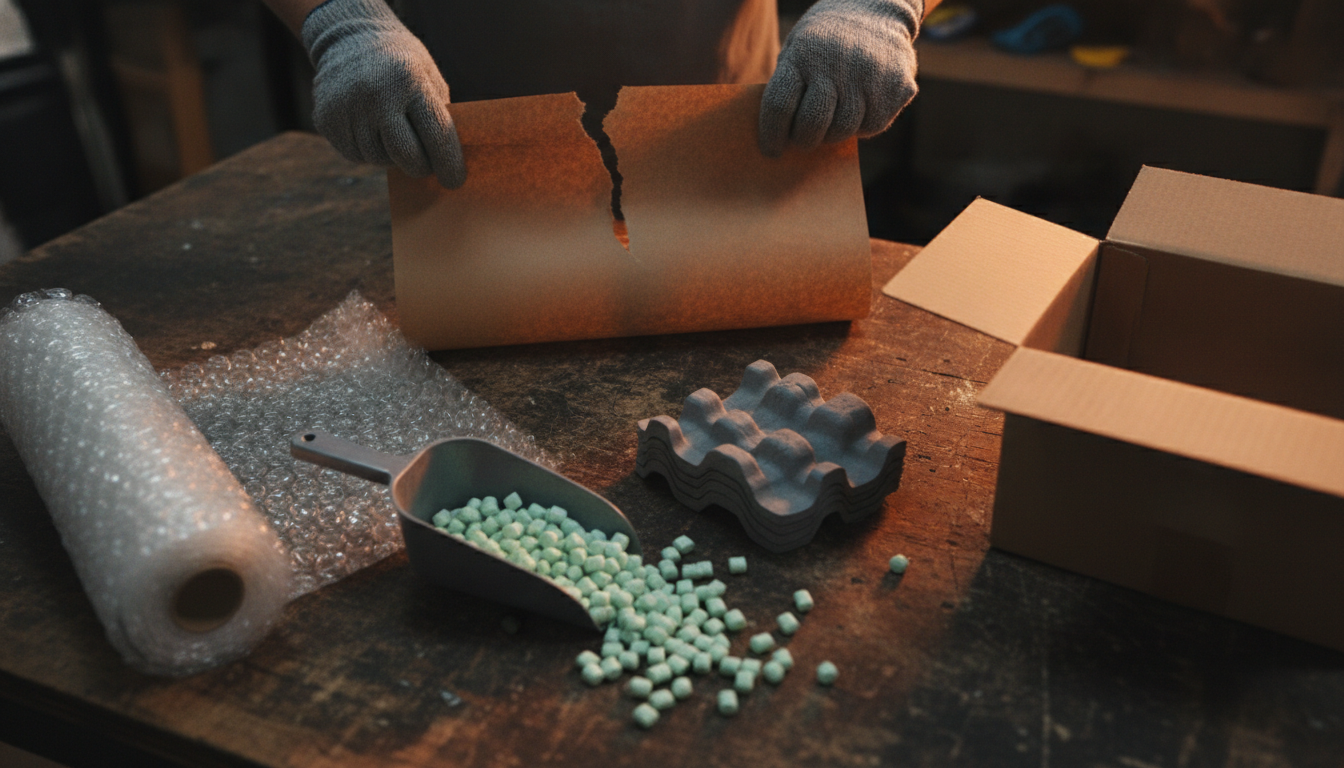
The packaging toolkit
Corrugated cardboard
The workhorse: lightweight, strong and good at cushioning — especially in double- or triple-wall form. Often the most sustainable choice too.
Bubble wrap
Excellent for cushioning fragile items — the air-filled bubbles absorb shock and vibration during handling.
Packing peanuts
Loose fill used to fill voids in boxes and stop items shifting in transit. Biodegradable starch options exist.
Foam inserts
Custom-cut foam gives superior, snug protection for delicate or high-value items that must not move.
Plastic packaging
Shrink wrap, poly bags and clamshells offer water resistance and can be moulded to fit specific shapes.
Paperboard & kraft paper
Thinner than corrugated card — great for inner packaging, lighter items, void fill or exterior wrapping.
Pros and cons at a glance
| Material | Pros | Cons |
|---|---|---|
| Corrugated cardboard | Lightweight, recyclable, inexpensive, good cushioning, versatile. | Can crush under heavy weight; susceptible to moisture. |
| Bubble wrap | Excellent cushioning, lightweight, flexible. | Not very eco-friendly (some recyclable options); can be bulky. |
| Packing peanuts | Fill voids effectively, lightweight. | Messy, items can settle to the bottom, can become statically charged; not eco-friendly unless biodegradable. |
| Foam inserts | Superior protection, custom-fit. | More expensive; less environmentally friendly unless biodegradable. |
| Plastic packaging | Water-resistant, versatile, mouldable. | Generally not eco-friendly; can be hard to recycle. |
| Paperboard | Lightweight, recyclable, good for lighter items. | Minimal cushioning; unsuitable for heavy or fragile items. |
| Kraft paper | Recyclable, inexpensive, biodegradable. | Limited protection; susceptible to moisture and tears. |
| Air pillows | Lightweight, decent void-fill and cushioning. | Can pop under pressure; plastic content is not eco-friendly. |
Techniques and methods
The best packaging technique depends heavily on what you’re shipping. Match the method to the goods, and you dramatically cut the risk of damage.
Packing different types of goods
- Fragile items – wrap each item individually in bubble wrap, then place it in a sturdy box with void fill to prevent movement. Consider “double-boxing”: a wrapped item in a smaller box, nested inside a larger one with cushioning between.
- Heavy items – use strong, double- or triple-walled boxes sized to prevent shifting, sealed with reinforced packing tape.
- Electronics – use anti-static bubble wrap or foam to protect sensitive components, and secure the item so it cannot move inside the box.
- Liquids – seal in leak-proof containers, surround with absorbent material, place in a waterproof bag, then in a sturdy box.
- Clothing – fold into poly bags or lightweight boxes; avoid overpacking, which crushes contents.
- Sharp objects – carefully wrap edges and points, and use strong, puncture-resistant packaging.
A step-by-step method for safe packing
- Assess the item — gauge fragility, weight, dimensions and any special needs such as temperature sensitivity.
- Choose the right box — slightly larger than the item to allow cushioning, and strong enough to support its weight.
- Cushion and protect — wrap individual items separately to guard against impact and vibration.
- Fill voids — stop the item shifting by filling empty space with peanuts, air pillows or crumpled paper.
- Seal securely — use strong packing tape and the “H-taping” method along all edges and seams for maximum security.
- Label clearly — add a legible label with recipient address, return address and handling instructions such as “Fragile” or “This Side Up”.
- Consider the journey — keep drop, impact and crush hazards in mind for the whole transit process.
Common mistakes to avoid
Typical packaging errors
- Wrong size box – too large lets the item move; too small leaves no room for cushioning.
- Insufficient cushioning – skimping leaves the item vulnerable to impacts.
- Not filling voids – empty space lets the item shift and collide with the box walls.
- Weak sealing – inadequate tape can let the box open in transit.
- Incorrect labelling – missing or illegible labels cause delays or misdelivery.
- Ignoring orientation – laying an item on its side when it should always stay upright.
- Combining incompatible items – sharp-edged items can damage others unless each is independently protected.
Environmental considerations
The environmental impact of packaging is a growing concern. Packaging waste contributes significantly to landfills and pollution — plastic in particular, because of its slow decomposition and potential harm to wildlife. Fortunately, viable eco-friendly alternatives keep improving.
Eco-friendly packaging options
- Recycled cardboard – reduces demand for virgin materials.
- Biodegradable packing peanuts – starch-based and decompose naturally.
- Mushroom packaging – compostable, grown from agricultural waste and mycelium.
- Recyclable air pillows – made from recycled material and recyclable after use.
- Paper-based tapes – a recyclable alternative to plastic packing tape.
- Plantable & reusable packaging – seed-embedded packaging that grows plants, or returnable packaging customers send back for reuse.
The takeaway
The art of packaging for courier transit lies in balancing protection, efficiency, cost-effectiveness and environmental responsibility. It blends science — understanding material properties and the forces at play — with the craft of creating a secure, presentable package. As e-commerce and courier demand keep growing, mastering this art becomes ever more vital. Follow the principles above and your goods will arrive safely, your customers will stay satisfied, and you’ll be doing your bit for a more sustainable future.
Frequently asked questions
What is the single most important packaging step?
Eliminating movement. Choose a box only slightly larger than the item, cushion it on all sides and fill every void so nothing shifts. Most transit damage comes from items moving and colliding with the box walls or each other.
How should I pack fragile items for a courier?
Wrap each item individually in bubble wrap, surround it with void fill in a sturdy box, and consider double-boxing for delicate or high-value goods — a wrapped item in a smaller box nested inside a larger one with cushioning between.
Can I use eco-friendly packaging without sacrificing protection?
Yes. Recycled corrugated cardboard, biodegradable peanuts, paper-based tape and recyclable air pillows offer protection comparable to conventional materials. The key is still right-sizing, cushioning and filling voids properly.
How do I reach the ICExpress team for a delivery?
The quickest route is to request a quote online and book your collection. For anything else, our team is happy to help with packing or shipping questions before you send.
Packed and ready to ship?
Get a fast, no-obligation courier quote and let ICExpress get your carefully packed parcel where it needs to go — safely and on time.