


Package Like a Pro: Your Fun Guide to Courier Packaging
TL;DR
Pick a sturdy box (double-wall corrugated for anything heavy, dense or fragile), leave at least 5 cm of cushioning between your item and every wall, immobilise the contents so nothing shifts, H-tape every seam with proper parcel tape, and label clearly. Right-size the box too — oversized parcels cost more once volumetric weight is applied. Do these six things and your parcel arrives intact.
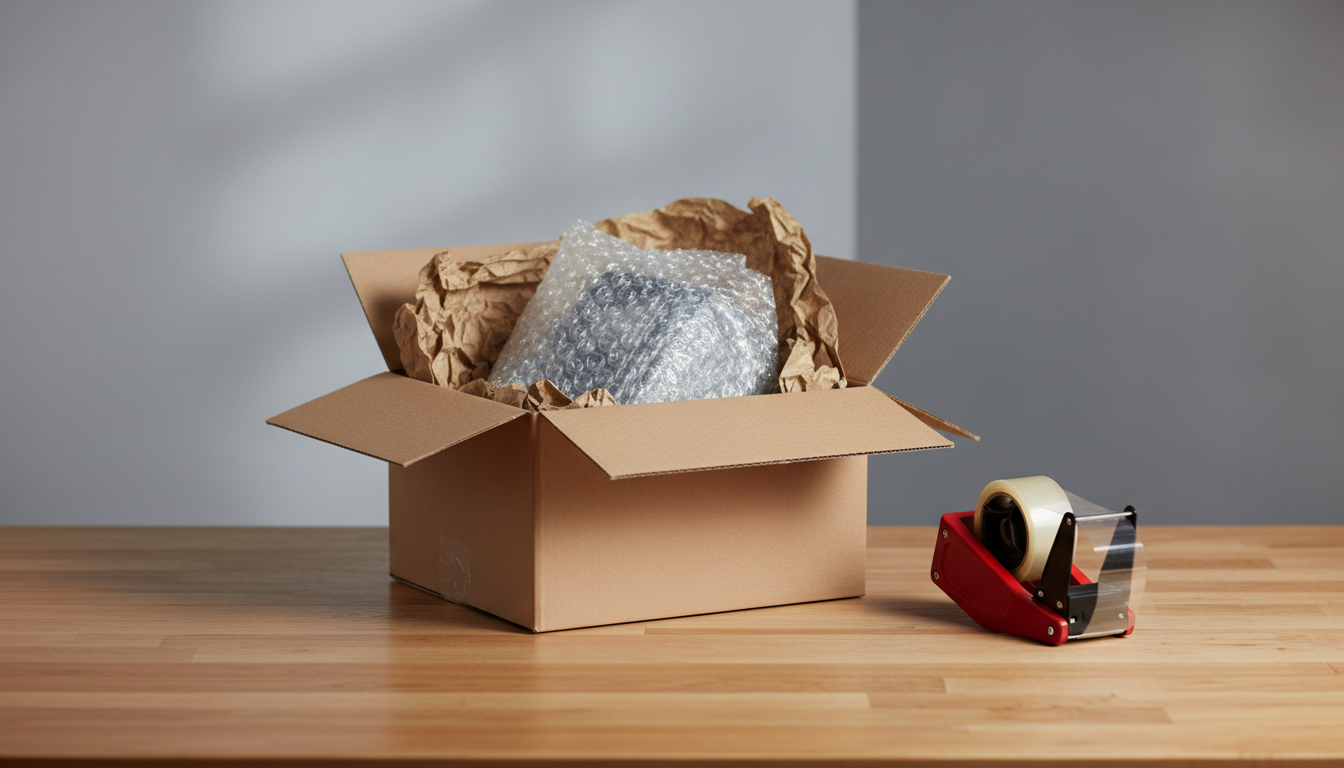
Good packaging is the quiet hero of every successful delivery. Get it right and your parcel glides through the network and arrives exactly as it left; get it wrong and even a short trip can dent, crush or break the contents. This practical guide walks you through how couriers and warehouse teams recommend packing a parcel — from choosing the box to marking it — so your shipment travels safely.
The 6 steps at a glance
Every well-packed parcel comes down to the same six moves. Here is the whole process before we dig into each one:
Right box
Choose a strong box that fits with room for cushioning — double-wall for heavy or fragile items.
Wrap & cushion
Wrap each item and leave at least 5 cm of padding on every side.
Fill the voids
Pack out every gap so the contents cannot shift, tip or collide in transit.
H-tape the seams
Seal top and bottom seams in an H shape with proper parcel tape.
Label clearly
Full destination and return address, printed legibly and firmly attached.
Mark fragile
Add a Fragile label for breakables and remove any old shipping labels.
Start with the right box
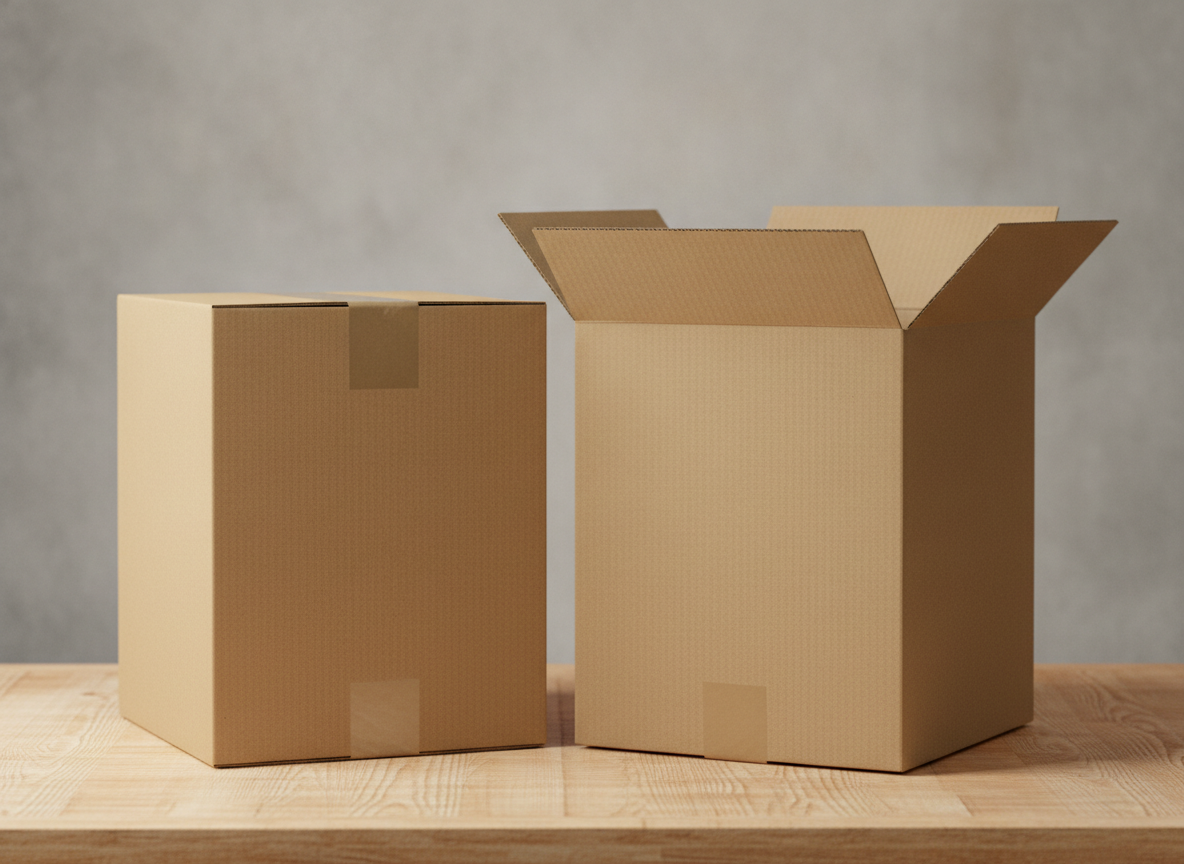
Think of the box like a pair of shoes: too big and the contents slide and rattle; too small and everything gets squeezed. The right box fits your item snugly with just enough room for a cushioning layer on every side. Always start with a strong, undamaged box — a tired box with soft corners or split seams is the single most common cause of transit damage.
Single-wall vs double-wall. Corrugated board comes in grades. Single-wall board (one fluted layer) is fine for most light, everyday parcels. Double-wall board (two fluted layers) is noticeably stronger and is the right choice for heavy, dense, awkward or fragile items — as a rule of thumb, step up to double-wall for anything over roughly 15–20 kg or anything you would be upset to see broken.
| Box type | Best for | Rule of thumb |
|---|---|---|
| Single-wall corrugated | Books, clothing, light homeware, most everyday parcels | Lighter, non-fragile loads |
| Double-wall corrugated | Heavy, dense, fragile or high-value items; stacked or palletised goods | Roughly 15–20 kg and up, or anything breakable |
Right-size to save money. Couriers bill on the greater of actual or volumetric weight (length × width × height in cm, divided by 5000 for domestic road courier). A box far bigger than its contents can push you into a higher volumetric weight — and it wastes cushioning. Fit the box to the item.
Worked example
A parcel measuring 40 × 30 × 20 cm has a volumetric weight of (40 × 30 × 20) ÷ 5000 = 4.8 kg. If the actual contents weigh only 2 kg, you are still billed on the 4.8 kg volumetric figure. Drop to a box that fits — say 30 × 20 × 15 cm — and the volumetric weight falls to 1.8 kg, so you pay on the 2 kg actual weight instead.
Cushion every item (the 5 cm rule)
Cushioning is what absorbs the knocks, drops and vibration of the journey. Wrap each item individually so nothing rubs against anything else, then make sure there is padding between the item and the box on all six sides.
The widely-used guideline — recommended by major carriers — is to leave at least 5 cm of cushioning between your item and every wall of the box. For heavy or especially delicate items, more is better. Wrap fragile pieces so they are protected from every angle, and keep them clear of the box corners, which take the hardest hits.
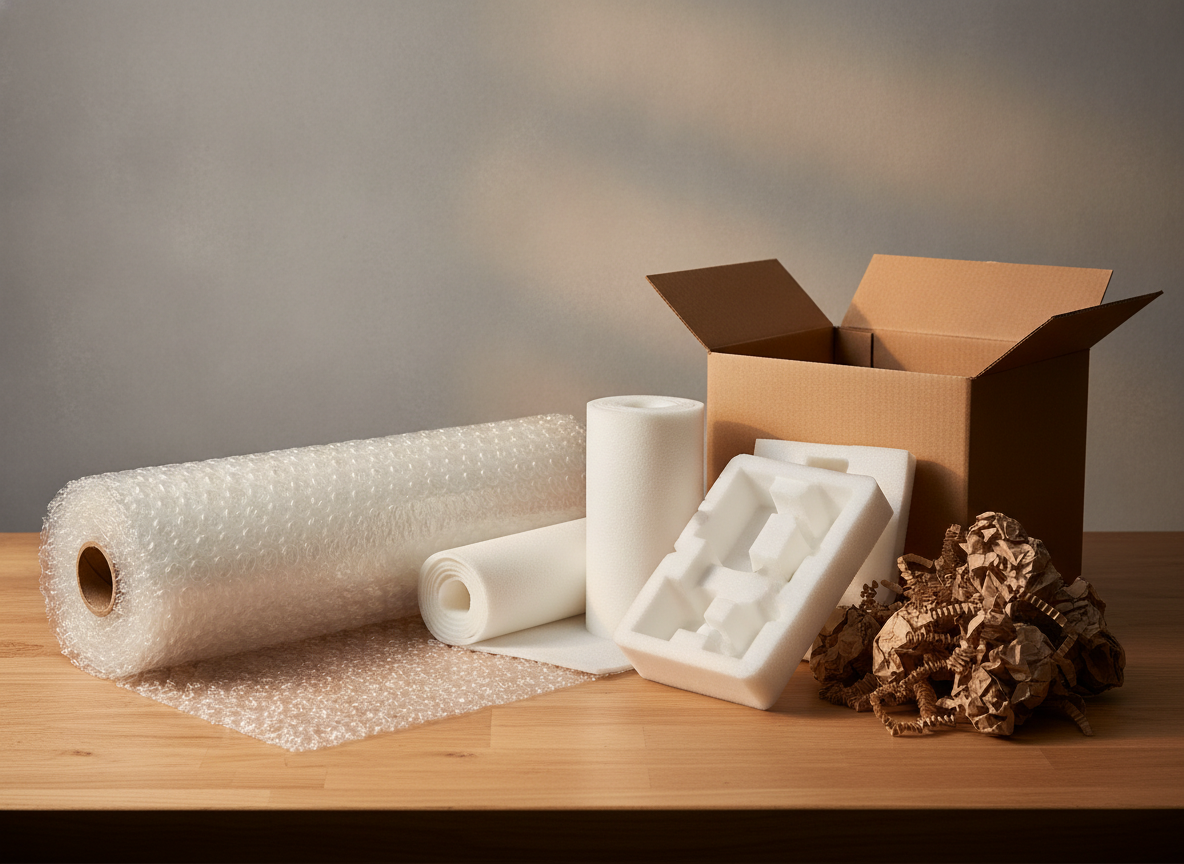
- Bubble wrap — ideal first layer around fragile and irregular items.
- Foam or air pillows — lightweight cushioning around and above the contents.
- Crumpled kraft paper — a cheap, effective wrap and void fill for sturdier goods.
Immobilise the contents
Empty space is where damage happens — items slide, tip and collide. Once each item is wrapped, pack out every remaining gap so the contents are locked in place and cannot move. When you seal the box, nothing inside should shift at all.
- Packing peanuts / loose fill — flow into awkward gaps and lock items in position.
- Air pillows — fast, light void fill for larger cavities.
- Crumpled paper — a simple, recyclable filler for most parcels.
The shake test. Before you seal, give the box a gentle shake. If you hear or feel anything moving, open it up and add more fill until it sounds and feels solid.
Seal it with the H-tape method
Sealing is not the place to save tape. Use strong parcel tape (48 mm pressure-sensitive or reinforced gummed tape), never light office or masking tape, and seal the box using the H-tape method: run a strip along the centre seam, then a strip across each edge where the flaps meet — forming an H — on both the top and the bottom of the box.
Do
- H-tape both top and bottom seams.
- Use 48 mm parcel or gummed tape.
- Reinforce corners and any weak spots.
Do not
- Rely on a single strip of tape.
- Use string, masking or office tape.
- Over-fill so the flaps bulge and cannot close flat.
Label clearly and mark fragile
A clear, complete label is what gets your parcel to the right place. Print the destination and return address legibly, double-check every line, and attach the label firmly to the largest flat face so it will not peel off. Cover or remove any old labels and barcodes from a reused box so scanners are not confused.
Add a Fragile label for breakable contents — a simple, cheap signal that tells everyone in the delivery chain to handle the parcel with extra care. Keep a copy of your waybill or tracking number so you can follow the shipment.
Special cases: liquids, electronics & awkward loads
Liquids
Seal every cap, then place each container in a sealed plastic bag with absorbent material (paper or cloth) around it, so a leak is contained. Cushion inside a sturdy box and mark which way is up. Note that alcohol and perishable, infectious or odorous items are not accepted on the standard courier network — check the prohibited-items policy before booking.
Electronics
Use the original box and moulded inserts where you can — they are designed for the product. Otherwise wrap the device in anti-static material, cushion it on all sides, and immobilise cables and accessories separately so they cannot knock the screen or ports.
Awkward, long or oversized items
Protect exposed edges and corners with edge protectors, wrap the whole item, and use a rigid outer — a double-wall box, a made-to-measure carton or a crate for anything heavy. Very large or heavy consignments may be best palletised and strapped. Do not ship goods loose in bags or sacks; loosely-packed containers are not accepted.
Fragile, valuable and prohibited items. Certain fragile, glass and porcelain goods travel under IC Express's specialised Valuable & Fragile Deliveries service rather than the standard network, provided they are packaged to industry standards. High-value items such as cash, jewellery, precious metals, artworks and antiques are not carried under any service, and personal documents such as passports and ID books are excluded too. For valuables that are accepted, consider adding Goods in Transit insurance, and always check the prohibited-items list before you book.
Common packaging mistakes to avoid
Avoid these
- Too little cushioning — under the 5 cm minimum on any side.
- Reusing a soft, torn or crushed box.
- An oversized box with the contents rattling around.
- Weak tape, or a single strip instead of H-taping.
- Old labels or barcodes left on a reused box.
- Shipping restricted or prohibited items.
Do instead
- Pad every side and pass the shake test.
- Start with a strong, undamaged box.
- Right-size the box and fill the voids.
- H-tape top and bottom with parcel tape.
- Remove old labels; attach one clear new label.
- Check the prohibited-items policy first.
When your parcel is packed, right-sized and sealed, you are ready to book. You can get an instant courier quote in under a minute — no account needed.
Packaging FAQs
What box should I use for fragile items?
Use a strong double-wall corrugated box that leaves at least 5 cm of cushioning on every side of the wrapped item. Double-wall board resists crushing far better than single-wall, which matters for anything breakable. Note that some fragile, glass and porcelain goods travel under IC Express's specialised Valuable & Fragile Deliveries service rather than the standard network — check the prohibited-items policy before you book.
How much cushioning is enough?
Aim for at least 5 cm of cushioning between your item and every wall of the box — top, bottom and all four sides. For heavy or especially delicate items, add more. The practical test is the shake test: once sealed, the contents should not move at all.
How do I package liquids?
Seal every cap tightly, then place each container inside a sealed plastic bag with absorbent material around it so any leak is contained. Cushion it inside a sturdy box and mark which way is up. Remember that alcohol and perishable or odorous items are not accepted on the standard courier network.
Can I reuse an old box?
Yes, as long as it is still strong and structurally sound — firm corners, intact seams, no soft or torn panels. Remove or cover every old label and barcode so the courier's scanners are not confused. Skip any box that flexes, sags or has been crushed.
What is the H-tape method?
H-taping means running one strip of parcel tape along the centre seam where the flaps meet, then a strip across each of the two edge seams — the three strips form the shape of an H. Do it on both the top and the bottom of the box for a secure, pressure-resistant seal.
Why does the box size affect what I pay?
Couriers bill on the greater of the actual weight and the volumetric weight (length × width × height in cm ÷ 5000 for domestic road courier). A box much bigger than its contents can raise the volumetric weight and push up the price, so right-sizing the box keeps costs down as well as protecting the contents.
Sources
Need a hand with your packing
Our team is here to help — call 086 9990 559 or reach us online and we will point you in the right direction.
Contact our team →