


The Digitisation of Transport: Technologies, Benefits & the Future of Mobility
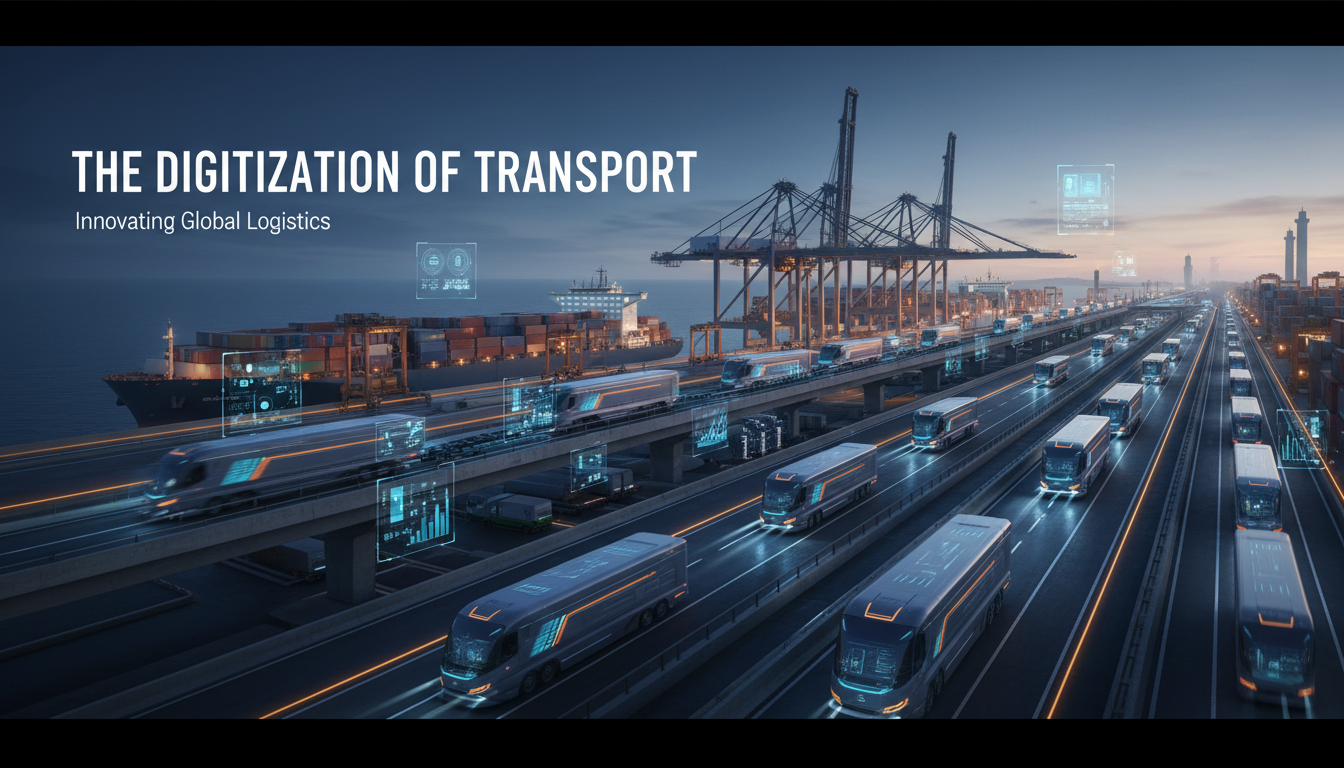
The landscape of how we move goods and people is undergoing a profound and rapid transformation. Welcome to the era of the digitisation of transport, a monumental shift that is redefining every facet of mobility, from urban planning to global supply chains. This isn't just about adding technology; it's about fundamentally reshaping operations, enhancing safety, and delivering unparalleled efficiency. As industries grapple with mounting pressures for speed, transparency, and sustainability, the transportation digital transformation emerges not as an option, but as an imperative. Propelled by innovations like artificial intelligence and a growing global focus on sustainable mobility, this powerful digital revolution is setting new benchmarks for connectivity and responsiveness. Recent data from a 2023 S&P Global Market Intelligence survey reveals that 67% of logistics firms already have a formal digital transformation strategy in place to actively digitise business processes, underscoring the widespread adoption across the sector. Moreover, the U.S. Department of Transportation continuously emphasises innovation, recognising that emerging technologies are critical for improving operations and enhancing traveller experiences. This article will explore the core concepts, pivotal technologies, immense benefits, and crucial challenges defining this exciting new chapter in transportation, showcasing how digital advancements are making our journeys safer, smarter, and more sustainable.
Defining the Digitisation of Transport
At its core, the digitisation of transport refers to the comprehensive integration of digital technologies and data into all aspects of transportation systems. This shift moves beyond mere automation; it involves creating intelligent, interconnected networks that can respond dynamically to real-time conditions. Thirty years ago, handling shipments was a paper-intensive process, reliant on phone calls and manual coordination. Today, thanks to transportation digital transformation, much of this work is semi-automated, driven by advanced transportation software and well-planned digital workflows. This evolution impacts everything from urban public transit, like London's iconic Oyster Card system which seamlessly integrated contactless payments for commuters, to sophisticated large-scale logistics operations. Notably, research published on MDPI.com highlights digital transformation's critical role in supporting transport decarbonisation efforts, underscoring the environmental benefits. The objective is clear: improve efficiency, enhance safety, reduce operational costs, and elevate the overall user experience. This holistic approach ensures that every link in the supply chain benefits from increased visibility and streamlined processes, paving the way for a more agile and responsive global movement of goods.
Key Insight: Digitalisation in Freight Management
The immediate benefits of this shift are palpable. In digitalisation in freight management, for instance, real-time data from vehicles and infrastructure allows for optimal route planning, predictive maintenance, and significant reductions in fuel consumption and carbon emissions. This not only cuts down operational costs but also aligns with the growing imperative for sustainability in digital transport. The National Transportation Library provides extensive data highlighting how such technological shifts contribute to a more efficient and environmentally friendly transport ecosystem. Furthermore, advanced data analytics empower logistics companies to proactively address supply chain disruptions, ensuring timely deliveries and enhancing overall customer satisfaction. The transition from legacy, fragmented systems to unified digital platforms is crucial for unlocking the full potential of these advancements, providing comprehensive visibility and control across complex networks.
Key Technologies Driving Digital Transformation in Transport
The bedrock of transportation digital transformation lies in a suite of advanced technologies working in synergy. One of the most impactful is Connected and Automated Mobility (CAM). This involves vehicles that can communicate with each other, with infrastructure, and with cloud-based systems, paving the way for self-driving vehicles and intelligent traffic management. Alongside CAM, the evolution of Intelligent Transportation Systems (ITS) integrates existing and emerging technologies to improve transportation efficiency and operations, addressing challenges like congestion and safety. These systems leverage vast amounts of data to provide real-time insights, enabling smart traffic signals, dynamic road pricing, and accident prevention mechanisms.
The power of real-time data collection and analysis is amplified by the Internet of Things (IoT) in transport systems. IoT devices, embedded in vehicles, infrastructure, and even cargo, provide continuous streams of information on location, condition, and environment. This granular data fuels advanced analytics, leading to precise AI route optimisation transport and predictive maintenance schedules, significantly reducing downtime and operational costs. For instance, sensors can monitor engine performance, tire pressure, or even cargo temperature, alerting operators to potential issues before they escalate. Such integration is vital for optimising services like cross-border road freight solutions, where real-time visibility is paramount for navigating complex customs and logistical challenges. The U.S. Department of Transportation actively explores new and emerging technologies, including IoT and AI, to enhance safety and efficiency across all modes.
Crucial Role of 5G and Telematics
Complementing IoT is telematics in transportation, which provides real-time tracking, diagnostics, and communication with vehicles. This technology is critical for fleet management, ensuring compliance with regulations, monitoring driver behaviour, and reacting swiftly to incidents. Furthermore, the advent of 5G connectivity in public transit is revolutionising how passengers experience urban mobility. High-speed, low-latency connectivity enables seamless streaming, real-time passenger information systems, and enhanced safety features, transforming the daily commute. Reliable connectivity is also essential for efficient international airfreight services, where quick data exchange and tracking are crucial for time-sensitive cargo. Technologies like blockchain are also being explored in logistics to create immutable ledgers, ensuring greater transparency and security in shipment tracking, a concept known as blockchain in logistics. The Intelligent Transportation Systems Joint Program Office (ITS JPO) consistently champions such advancements, pushing the boundaries of what's possible in smart mobility.
Benefits and Challenges of Digital Transport
The collective impact of the digitisation of transport extends far beyond mere technological upgrade; it delivers tangible benefits across safety, cost, and user experience. Firstly, safety is dramatically enhanced through predictive analytics that anticipate maintenance needs, real-time monitoring of vehicles and drivers, and advanced driver-assistance systems facilitated by connected and automated mobility. Fewer accidents, reduced risks, and faster response times contribute to safer roads for everyone. Leading publications like Mass Transit Magazine frequently highlight how digital transformation drives innovation in public transit, improving the quality of life in urban areas. Secondly, cost reductions are significant. Optimised routes, reduced fuel consumption, minimised paperwork, and efficient resource allocation, all powered by transportation digital transformation, lead to substantial operational savings. This is particularly relevant for economy road freight options where every efficiency gain contributes to competitive pricing and profitability. The Bureau of Transportation Statistics (BTS) continually publishes data that underlines the economic advantages derived from these digital advancements across the transport sector.
From a customer perspective, the benefits are equally transformative. Smart mobility solutions offer personalised journey planning, on-demand services, and seamless multi-modal transportation options. Critically, real-time passenger information systems keep commuters informed, reducing anxiety and improving overall travel predictability, whether for public transport or parcel deliveries. This level of transparency also extends to complex processes like courier customs documentation, where digital platforms streamline submissions and tracking, significantly reducing manual errors and speeding up processes. The Federal Transit Administration's (FTA) commitment to research and innovation further highlights the ongoing efforts to leverage technology for improved public transportation systems and services. These innovations are not without their challenges, however. The industry faces an acute shortage of skilled workers capable of navigating these new technologies, alongside the integration complexities of legacy systems and the persistent need for robust cybersecurity measures. Yet, the overwhelming consensus, as highlighted by a leading U.S. DOT research facility, Volpe, is that the opportunities far outweigh the hurdles, paving the way for a more intelligent, efficient, and responsive global transport landscape.
Frequently Asked Questions About Transport Digitisation
What is the digitisation of transport?
The digitisation of transport refers to the comprehensive adoption and integration of digital technologies and data across all facets of the transportation sector. This includes everything from automated vehicle systems and smart infrastructure to advanced logistics software and real-time information platforms, all designed to enhance efficiency, safety, and user experience. It's a fundamental shift from traditional, often manual, processes to intelligent, data-driven operations.
How does AI optimise transport routes?
AI optimises transport routes by leveraging sophisticated algorithms to analyse vast datasets, including real-time traffic conditions, weather patterns, historical routes, vehicle capacity, and delivery schedules. This enables dynamic adjustments to routes, minimises congestion, reduces fuel consumption, and significantly improves delivery times. This AI route optimisation transport contributes directly to both operational efficiency and environmental sustainability.
What role does 5G play in public transit?
5G connectivity in public transit is a game-changer, providing high-speed, low-latency, and highly reliable wireless communication. This enables real-time data exchange for vehicle-to-infrastructure (V2I) communication, supports autonomous public transport, and powers advanced real-time passenger information systems. For passengers, it means seamless connectivity, accurate arrival predictions, and an overall enhanced commuting experience. For operators, it allows for better resource management and quicker responses to unforeseen events.
What are the benefits of intelligent transportation systems?
Intelligent Transportation Systems (ITS) offer a multitude of benefits, foremost among them being improved traffic management and enhanced safety. By integrating advanced communication, control, and information technologies, ITS can reduce congestion, optimise traffic flow, minimise emissions, and provide immediate incident detection and response. This comprehensive approach leads to more efficient travel times, reduced operational costs, and significantly improved road safety for all users. Volpe, the U.S. DOT national transportation systems research facility, is at the forefront of researching and deploying these systems to improve transportation for the public good.
Embrace the Future of Transport with ICExpress
The transportation digital transformation is not merely a trend; it's the fundamental trajectory of modern mobility. As we've explored, the pervasive digitisation of transport is ushering in an era of unprecedented efficiency, safety, and sustainability, powered by innovations like AI, IoT, and 5G connectivity. These advancements promise a future where journeys are smoother, supply chains are more resilient, and environmental impact is minimised. From enhancing professional packaging guidelines to optimising complex logistical networks, the digital revolution offers solutions for every challenge. Embrace this transformative journey with ICExpress. We are committed to navigating this new landscape alongside our clients, providing cutting-edge logistics and courier services tailored for the digitised world. Contact us today to learn how we can help your business thrive in the smart mobility era.
Plan your next shipment
Get a free, no-obligation courier quote in under a minute. No account needed.