


Packaging Guide: Ship Like a Pro with ICExpress
Secure packaging is the single biggest thing you control for safe handling and smooth cargo transfers. While packing is your responsibility, ICExpress is here to guide you. Use these essential tips to prepare every parcel perfectly for transit — and remember you can order packaging materials online or at your nearest kiosk.
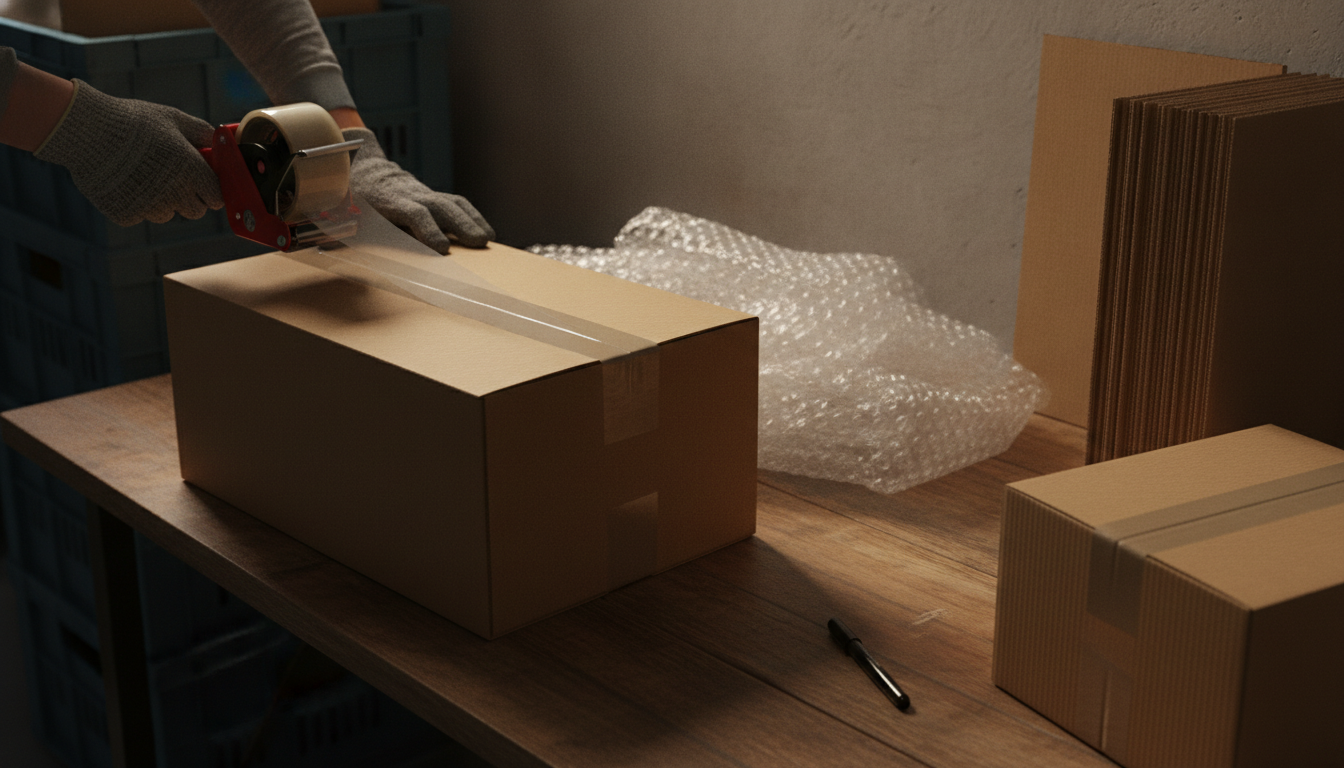
How to choose your box or carton
Selecting the right box is the first step to secure shipping. Give your items room to be cushioned: choose smaller double-walled boxes for heavier goods, and larger boxes for light, bulky items.
Use sturdy, corrugated boxes
The box must be structurally sound with intact flaps. Never reuse a damaged or crushed box.
Skip the supermarket boxes
Avoid fruit boxes, cereal boxes and random retail boxes — they are not built for courier handling.
Do not overload
An overloaded box can burst at the bottom or be dropped because its weight was underestimated.
Health & safety: our maximum liftable weight is 17 kg per item. If a carton is heavier, split it into smaller packages under 17 kg, or arrange for someone to help the driver at both pickup and delivery. Mark a heavy carton HEAVY in bold and write the weight beside it.
How to package your goods
Your parcel may be handled two to four times between pickup and delivery, so pack it to survive a one-metre drop. Always start with a sturdy box or container.
- One item per box where you can. Package multiple goods individually and use more than one box so each gets its own protection.
- Reuse original packaging for electronics. Internal polystyrene moulds are ideal; if unavailable, buy proper boxes and bubble wrap for fragile items.
- Cushion everything. Fill voids so nothing can move. Avoid shredded paper or scrunched newspaper — it compacts in transit and stops protecting.
- Seal it properly. Use broad pressure-sensitive plastic tape along every seam. Never use masking tape, Scotch tape, duct tape or string.
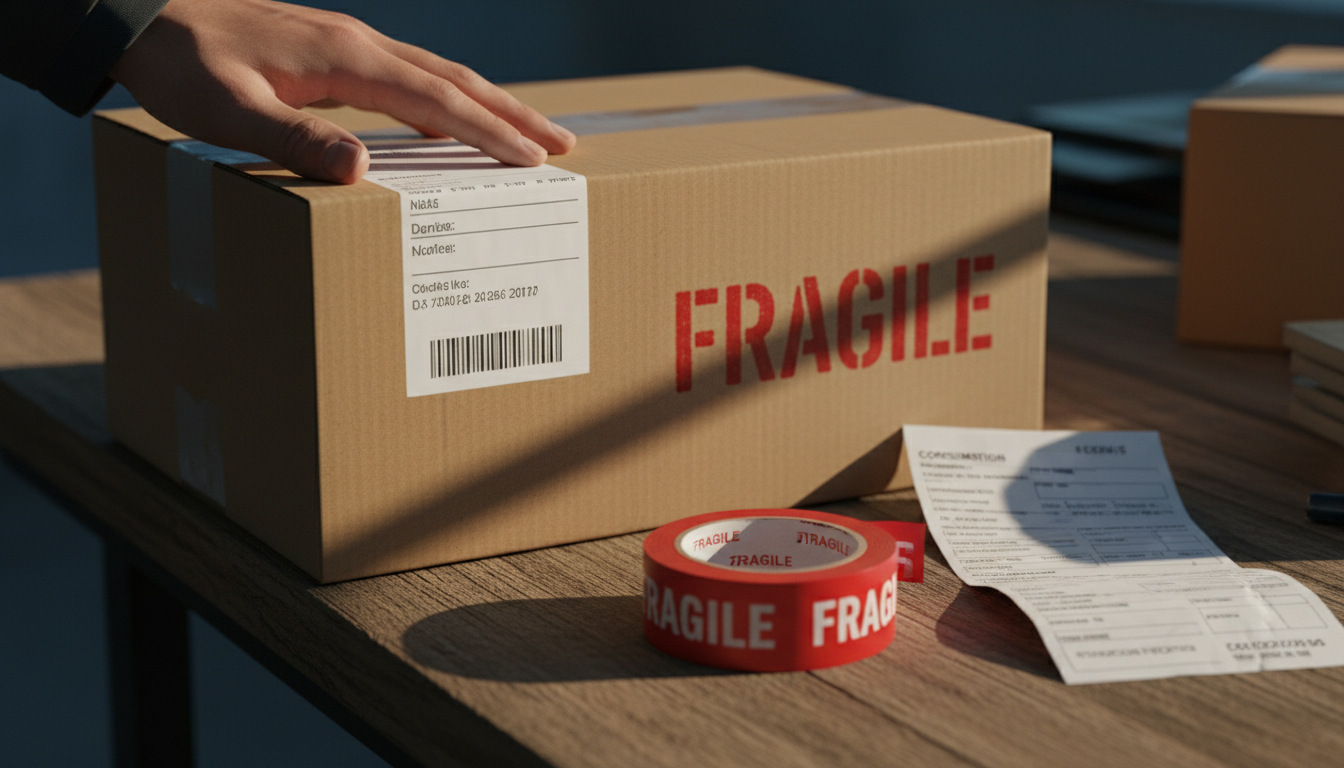
Tape is not the place to economise. Run broad, pressure-sensitive plastic tape along the centre seam and both edge seams, top and bottom, so the flaps cannot work open under the weight of the boxes stacked above yours. Masking tape, Scotch tape, duct tape and string all fail in transit.
How to label your parcel
Once packed, correct addressing keeps your delivery on time.
- Mark fragile goods FRAGILE with coloured fragile tape or a bold coloured marker.
- On second-hand boxes, remove old address labels and barcodes to prevent confusion and delays.
- Never place the label over a seam, a closure or sealing tape.
- Shipping across a border? Customs paperwork travels with the parcel too — see our guide to shipping to and from South Africa.
Consignment note essentials
A consignment note is crucial for correct delivery. Include:
- Sender and receiver name, full address with postcode, a contact name and phone number.
- The number of items, plus the weight and dimensions of each.
- The transport service required (road freight, air freight, local courier, overnight satchel, international, etc.).
- A signed and dated note.
Belt and braces: drop a slip of paper with both your and the receiver’s details inside the carton, in case the outer label is lost in transit.
What cannot be shipped
For safety and compliance, the following items cannot be sent:
| Artwork, paintings, sculptures | Jewellery | Baked goods |
| Glass items & crockery | Cars / vehicle parts holding liquid or oil | Liquids & paint |
| Coins, gold, cash, bonds | Livestock & animals | Motorbikes / scooters |
| Dangerous or hazardous goods | Furniture | Perfume |
| Pictures & picture frames | Shower screens |
Frequently asked questions
What tape should I use to seal a courier box?
Use broad, pressure-sensitive plastic packing tape along every seam, top and bottom. Avoid masking tape, Scotch tape, duct tape and string — none of them hold a courier box closed reliably.
What if my carton is heavier than 17 kg?
Break it into smaller packages under 17 kg each where possible. If that is not practical, make sure someone is available at both the pickup and delivery addresses to help the driver, and mark the carton HEAVY with its weight.
Where can I get packaging materials?
We stock boxes, pallet wrap, padded envelopes, stickers, tape and stationery — plus free flyers. Grab them at a kiosk near you or order online. Once the parcel is packed, our tracked door-to-door delivery service takes it from there.
Packing something tricky
Our team can advise on the right box, cushioning and labelling before you ship. Talk to a real person.
Contact our team →