


Pallet Freight in South Africa: How It Is Priced and When It Pays
Palletised freight is the cheapest way to move a mid-sized consignment in South Africa, and the most commonly mispriced. The rate you are quoted is driven less by what is on the pallet than by how much truck space it occupies, whether anything can be stacked on top of it, and what equipment is needed to get it off the vehicle. This guide explains those levers so you can ask for a rate that will not change when the truck arrives.
Key takeaways
- Pallet rates are set by deck space, not weight alone. A light pallet that cannot be stacked costs close to what a heavy one costs.
- Stackability is the single biggest lever. A pallet that accepts another on top uses half the deck space and is priced accordingly.
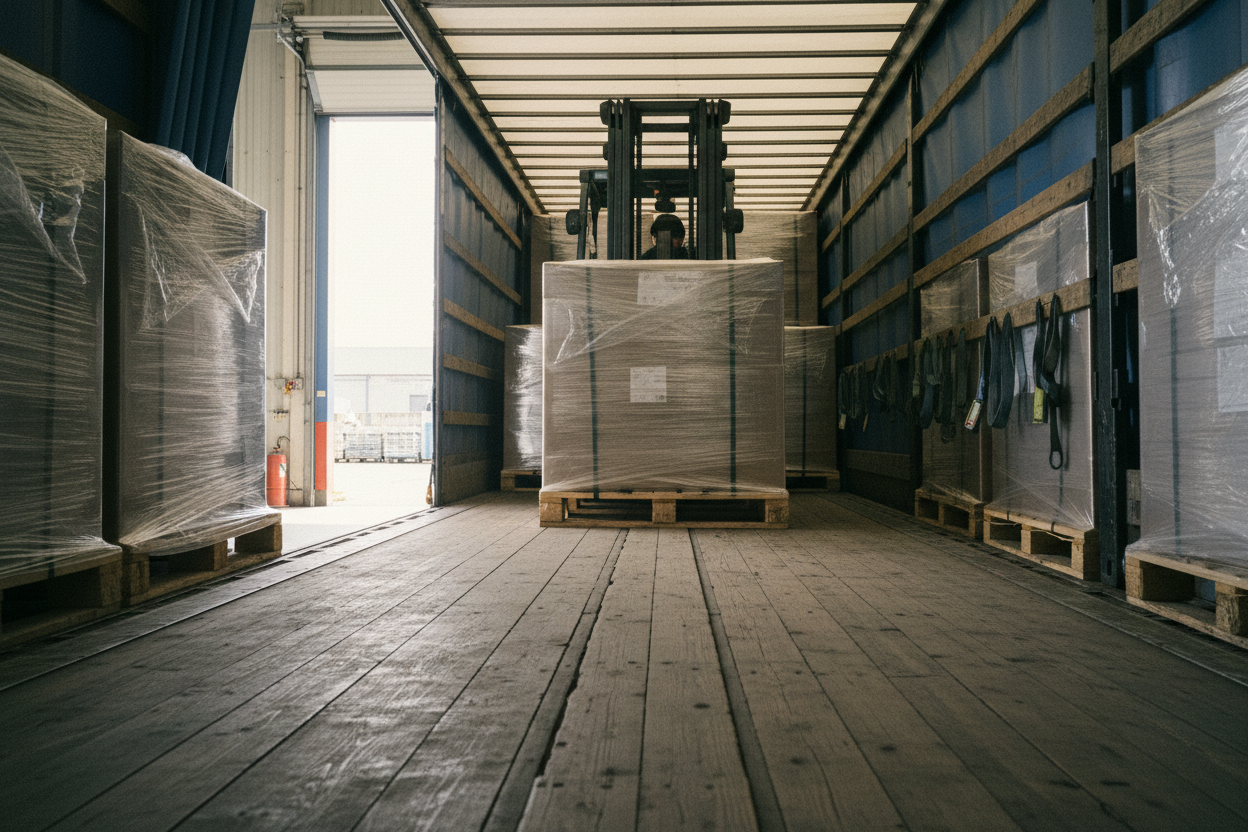
- Access equipment is a real line item. If there is no forklift or loading dock at either end, the vehicle needs a tail-lift, and that changes which truck can take the job.
- Wrapping and labelling are not housekeeping. A pallet that loses shape in transit gets rehandled, and rehandling is where damage and delay come from.
- Give a carrier the pallet count, the dimensions, the weight and the access situation at both ends and you will get a firm rate. Leave any of those out and you will get an estimate that moves.
When palletising pays for itself
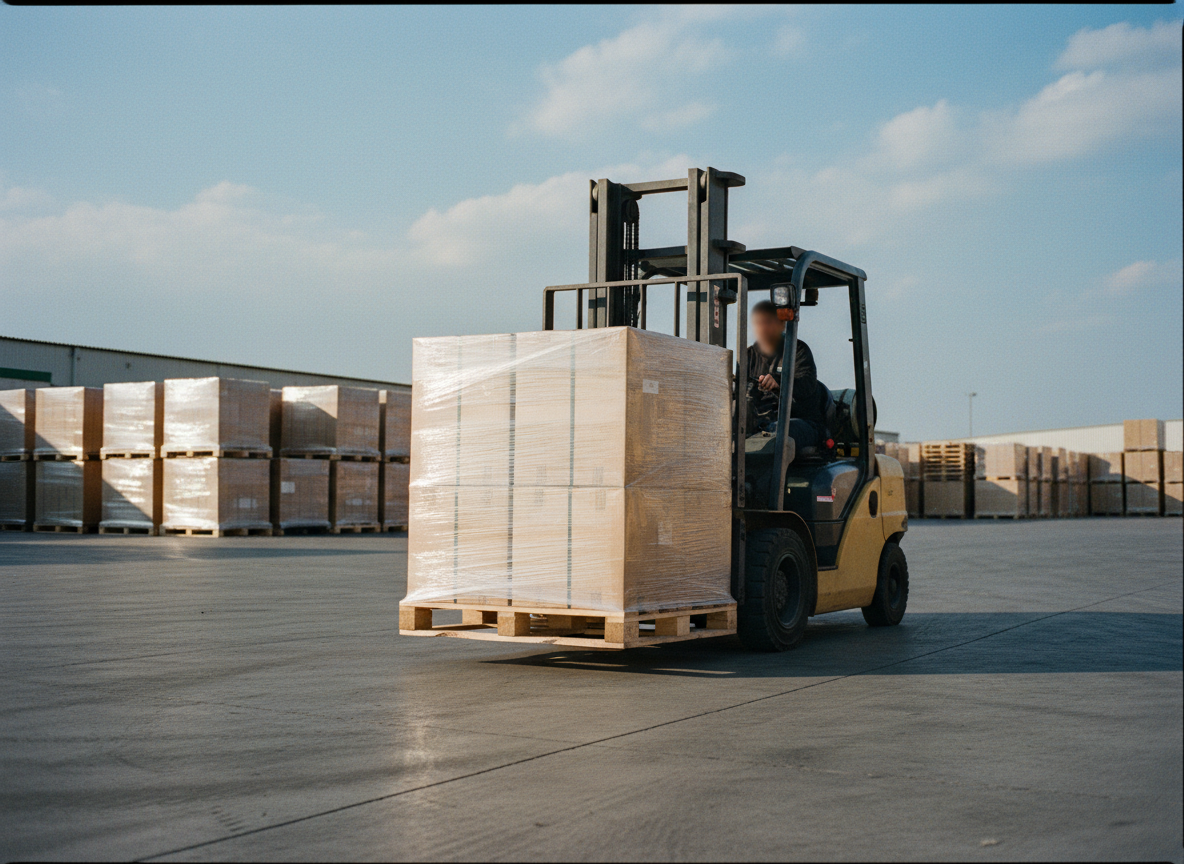
The rough threshold is the point at which handling individual items costs more than the pallet does. If a consignment runs to more than a handful of cartons, or contains anything heavy enough that one person should not lift it, palletising almost always works out cheaper and arrives in better condition.
Palletising buys three things. Handling drops from many touches to one, and every touch is an opportunity for damage. The load becomes a single unit with a known footprint, which is what lets a carrier price it accurately instead of padding the quote for uncertainty. And it becomes mechanically handleable at both ends, which is faster and safer than a chain of people carrying boxes.
It stops paying when the consignment is small enough to move as parcels, or so large or awkward that it needs a flat-deck or abnormal-load solution instead. Long items that overhang the pallet edge are a common false economy: the overhang cannot be stacked around, so you pay for the deck space the overhang blocks as well as the pallet itself.
The four things that set a pallet rate
Deck space
A carrier sells floor area on a trailer. Your pallet's footprint, and whether anything can go on top of it, decides how much of that area your consignment consumes.
Weight
Weight matters where it approaches the vehicle's payload limit, and it decides which handling equipment is required. Below that, footprint usually governs.
The lane
Main inter-city corridors run frequently and price keenly. Off-corridor and rural delivery points cost more because the return leg is harder to fill.
Access
Dock, forklift, tail-lift or nothing at all. This determines the vehicle, and sometimes whether a job is viable at a given price.
Standard pallet sizes used in South Africa
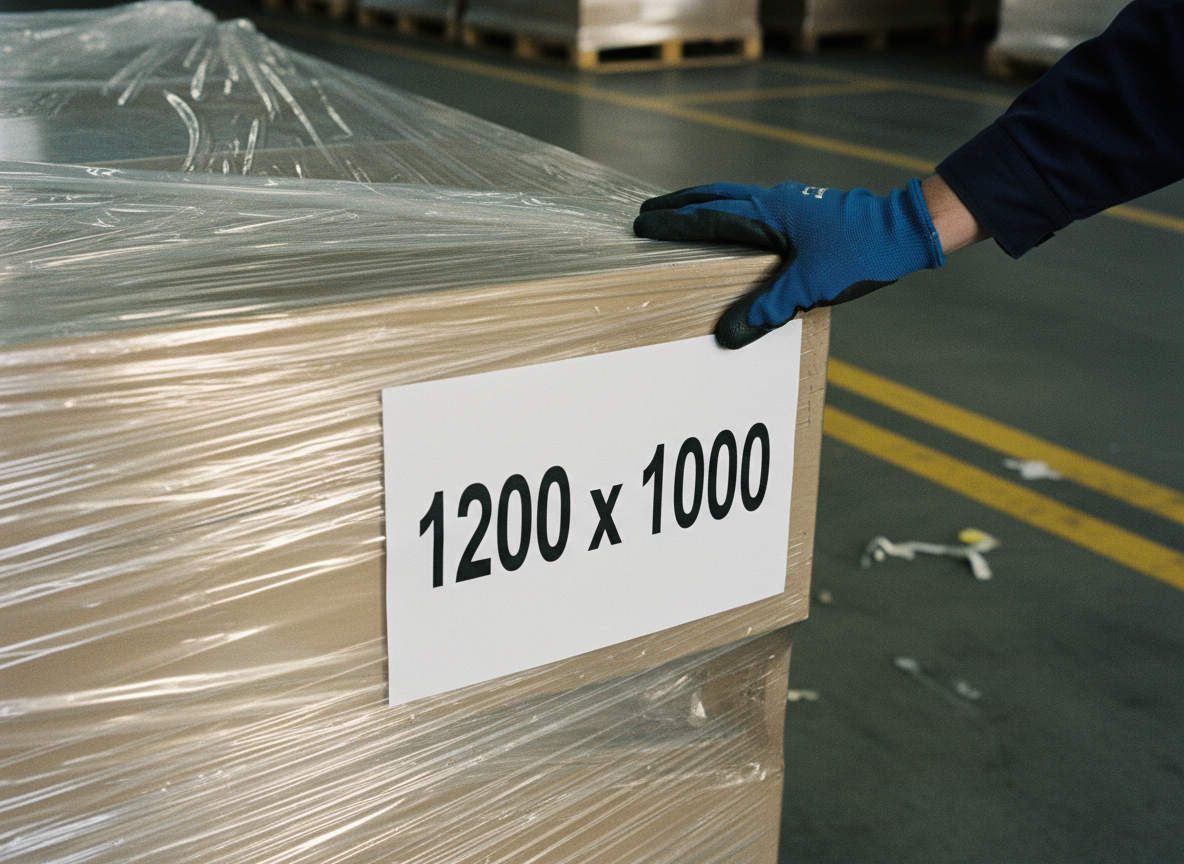
Two footprints cover most South African palletised freight. The 1200 x 1000 mm pallet is the general-purpose standard and is what most pooled pallets in circulation use. According to CHEP's published South African pallet range, its wooden and plastic pooling pallets carry the 1000 x 1200 mm footprint, and no 1200 x 800 mm pallet appears in that range at all. The 1200 x 800 mm "Euro" pallet is common on imported goods and in some retail supply chains.
What matters more than which one you use is that you tell the carrier which it is, and that you give the loaded height. Height is the field most often left blank on a quote request and the one most likely to change the price, because it decides whether a second pallet can go on top.
Pooled pallets. If you are shipping on a pooled pallet, that pallet belongs to the pool operator, not to you or your customer. Confirm who is accountable for its return before it leaves, because an unreturned pallet is an invoice that arrives weeks later.
Stackable or not: the biggest single cost lever
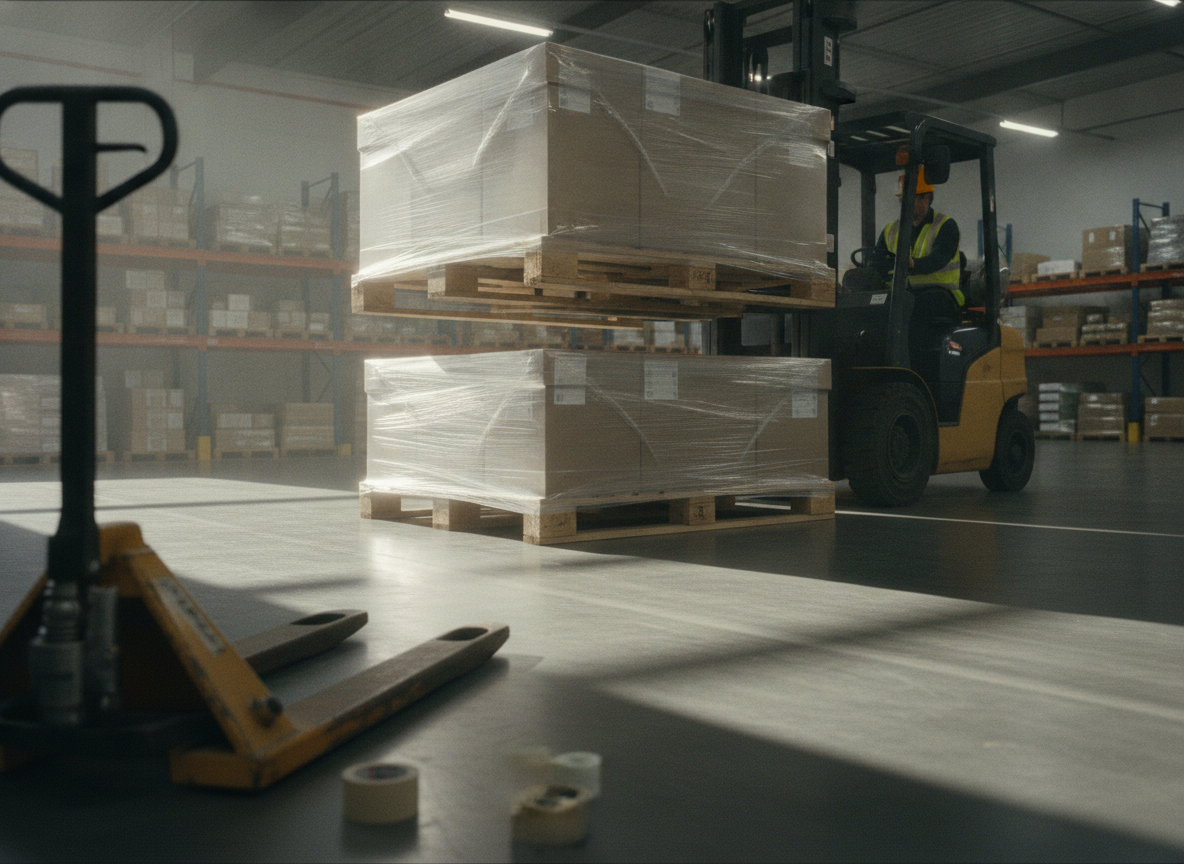
A stackable pallet is one a carrier can safely place another pallet on top of. That single property can halve the deck space your consignment occupies, and carriers price accordingly.
A pallet is generally not stackable if the load is fragile, if the top surface is uneven or domed, if anything protrudes above the wrapped profile, or if the goods cannot bear the weight of another loaded pallet. If you are unsure, say so rather than guessing: a pallet declared stackable that turns out not to be will either be re-rated on the day or travel with the space above it blocked, and the correction is not in your favour.
Where a load is close to the line, building it flatter and squarer is often worth the effort. Getting a domed load down to a stackable profile can change the deck space you are charged for.
Getting it on and off the truck
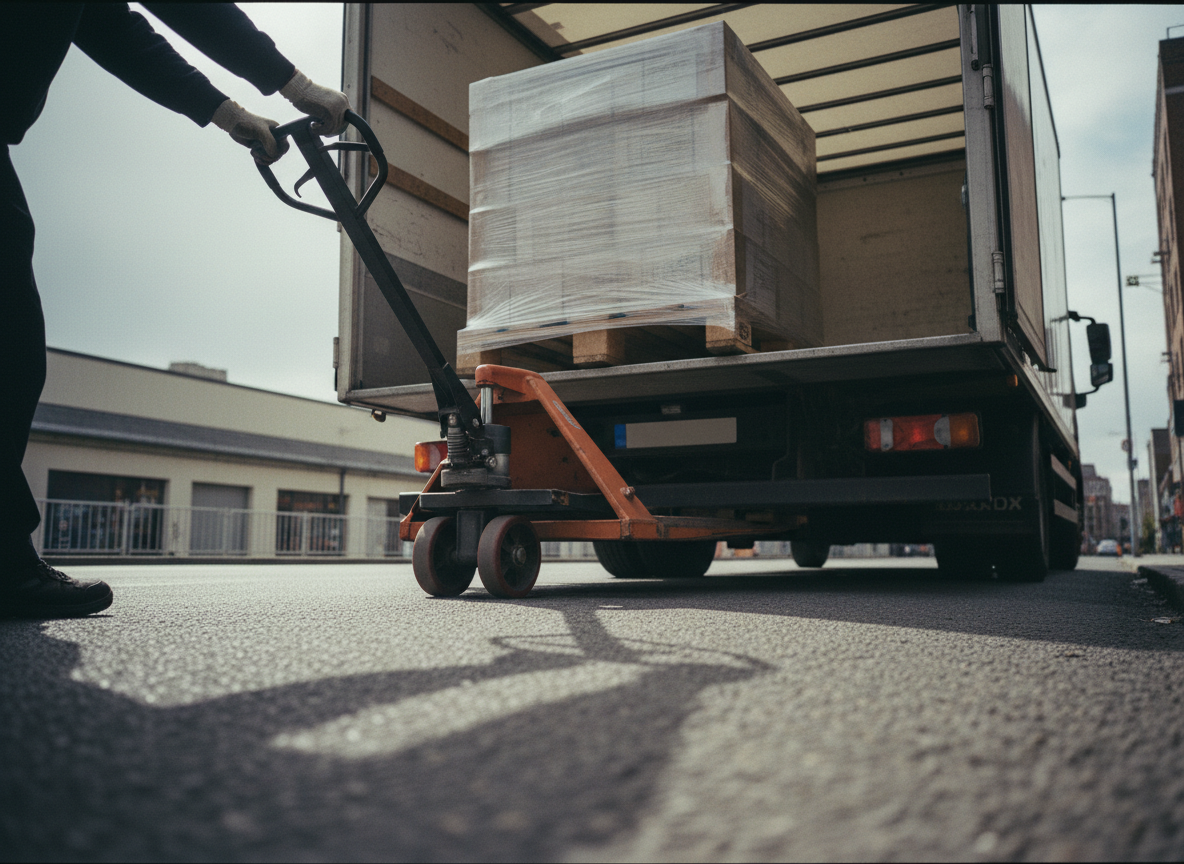
Loading equipment is a genuine constraint, not a formality. A site with a raised dock or a forklift can accept most vehicles. A site with neither needs a tail-lift, which is a hydraulic platform on the back of the truck, and tail-lift vehicles are a smaller part of any fleet.
Two things follow. A tail-lift job has to be dispatched on a vehicle that has one, so the collection window is narrower. And a tail-lift has a working limit, so a single very heavy pallet may not be liftable even though the truck could carry it comfortably.
Check the ground as well as the equipment. A tail-lift needs firm, level standing to work safely. Soft verges, steep driveways and busy roadside stops are the usual reasons a delivery fails on arrival rather than at booking.
How to build a pallet that arrives intact
- Match the load to the pallet. Nothing should overhang the edges. An overhanging corner is the first thing to be caught by another load or a forklift tine.
- Heaviest at the bottom, flat on top. Build in layers, keep the top surface as level as you can, and interlock cartons where the stack allows it.
- Wrap the load to the pallet, not just around it. Take several turns of stretch wrap around the pallet base itself so the load and the pallet move as one unit.
- Protect the corners. Edge boards or corner protectors under the wrap stop strapping from crushing the outer cartons and hold the stack square.
- Label the pallet, not only the cartons. Put clear delivery details on at least two adjacent sides. A pallet is handled by its outside; nobody unwraps it to find an address.
- Photograph it before it leaves. A photo of a correctly built pallet is the cheapest evidence you will ever hold if a condition dispute arises.
Get a pallet freight quote
Tell us what is on the pallets, where they are going and what equipment is available at each end. The more accurately the height, weight and stackability are described, the closer the quoted rate will be to the invoiced one.
Pallet freight questions we are asked most
How many cartons justify a pallet?
There is no fixed number. The practical test is handling: once a consignment needs more than a few individual touches, or contains anything one person should not lift on their own, a pallet usually costs less than handling the pieces separately and arrives in better shape.
Do I pay by weight or by size?
Both are assessed, and the one that costs more governs. For most palletised freight the deciding factor is the deck space consumed rather than the mass, which is why stackability and loaded height matter so much to the rate.
What happens if I declare a pallet stackable and it is not?
The carrier either re-rates the consignment to reflect the deck space actually blocked, or moves it with the space above it unused. Either way the correction happens after the fact. Declaring it accurately up front is cheaper.
Can you collect where there is no forklift?
Yes, on a tail-lift vehicle, provided there is firm level ground for the platform to work on and the pallet is within the tail-lift's working limit. Tell us at quote stage so the right vehicle is allocated rather than discovered on the day.
How should I prepare a pallet for a long haul?
Build it square with the heaviest items at the base, wrap the load down onto the pallet itself so the two move as one, protect the corners, and label at least two adjacent sides. Long-haul road freight vibrates continuously, and a load that is not secured to its pallet will gradually work loose.