


Who Actually Moves Your Freight? How Carrier Networks Work in South Africa
Ask a freight company how they will move your load and the answer often starts with what they own — how many trucks, how many depots, how many people. It is a fair question, and it tells you less than you would expect.
What decides whether your pallets arrive on time and undamaged is rarely the name painted on the vehicle. It is whether the vehicle, the route and the operator were the right match for that particular load. Here is how road freight networks in South Africa actually fit together — and the questions that separate a good answer from a confident one.
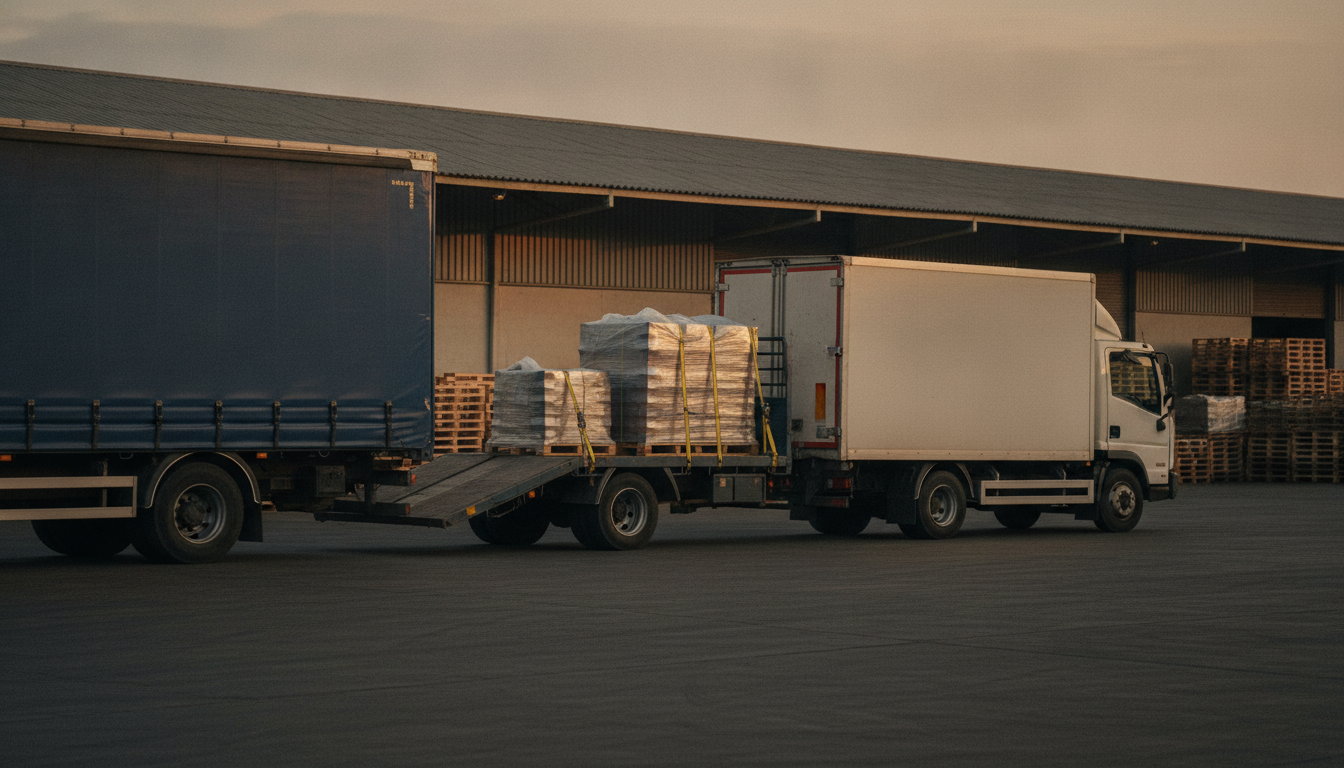
At a glance
- Whether a company owns its vehicles is a capital decision, not a service promise — and it has a yes/no answer that tells you little about your load.
- Four limits are structural for every operator: lane economics, equipment, finite capacity, and cross-border permitting.
- What actually decides the right vehicle is weight against volumetric weight, stackability, what equipment is at each end, and the delivery window.
- The useful questions are about the operator, the permit, the cover and the vehicle — not about fleet size. Five of them are set out below.
On this page
Why “do you own your trucks?” answers less than you think
Owning vehicles is a capital decision before it is a service promise. A fleet is a fixed cost that has to be kept working, and that quietly shapes what gets offered to you: the vehicle that happens to be free this afternoon is not always the vehicle your consignment needs.
More to the point, every operator eventually meets a load its own equipment does not suit, or a route it does not run often enough to run economically. At that point there are exactly two options — turn the work away, or bring in an operator who does run it. Both are legitimate. The difference that matters to you is whether you are told which one is happening.
So “do you own your trucks?” is a weaker question than it sounds. It has a yes or no answer, and neither one tells you what will happen to your pallets on a Thursday in December when the usual vehicle is already loaded.
What no single network covers on its own
Four limits are structural. They are not signs of a weak operator — they apply to everyone, and knowing about them makes you a considerably better buyer of freight.
Lane economics
A vehicle that runs a route with nothing to carry back has to earn the return leg somehow, and that cost reaches your quote.
Equipment
Tail-lift, flatbed, curtain-side, temperature control. An operator keeps what its typical work needs — not one of everything.
Capacity
Vehicles are a finite number. In a seasonal peak a fully committed fleet has no more of them.
Cross-border
Regional routes are permit-regulated, so holding the right authority matters more than the size of a fleet.
That last one is worth being concrete about. Road transport between South Africa and its neighbours is permit-regulated: the Cross-Border Road Transport Agency (C-BRTA) issues cross-border permits and regulates operators on those routes. So on a cross-border leg the useful question is not how many vehicles a company owns, but whether the operator actually carrying your goods holds the right permit for that corridor.
What changes from load to load
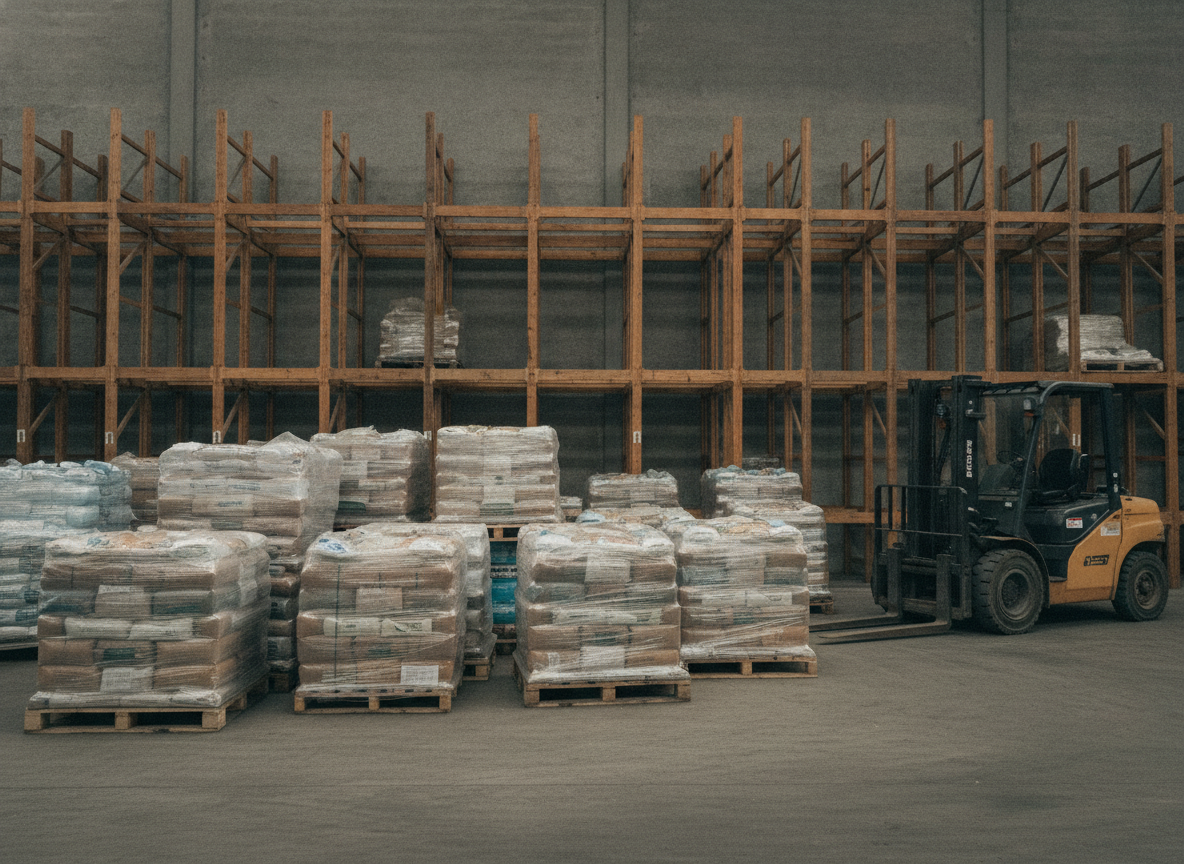
Two consignments of identical weight can need completely different handling. These are the variables that decide which vehicle, and which operator, suit your freight:
- Weight against volumetric weight. Light, bulky freight fills a vehicle long before it reaches a payload limit, and is usually charged on the greater of the two.
- Dimensions and stackability. Whether anything can safely go on top decides how much of a vehicle your load really occupies.
- What is at each end. A loading dock and a forklift is a different job from a pavement and two people.
- The delivery window. A fixed morning deadline and “sometime this week” are different products, priced differently.
Anything abnormal is a category of its own. Over-height, over-width or over-length loads are routed rather than simply driven, and on the national road network SANRAL is the roads authority involved. If your load is unusual in any dimension, say so at quoting stage rather than on collection day.
What to ask any freight provider
These five questions work on any operator, ourselves included. A confident answer is not the same as a good one — what you are listening for is specifics.
Who is actually moving this load, and are they authorised for this route?
A good answer names the operator, or says plainly that it is not settled yet and when it will be. On a cross-border leg you want to hear about the permit for that corridor, not about the size of a fleet.
What cover applies to this consignment, and what is excluded?
Cover is neither automatic nor unlimited. Ask what the limit is, what sits on the excluded list, and whether your commodity is on it. We have written up what goods-in-transit cover does and does not include.
What happens when it goes wrong, and who do I call?
You are asking for a name, a number, and what that person is actually able to do about it. “Someone will be in touch” is not a process.
Is this the right vehicle for the load, or the vehicle that was available?
A good operator will tell you why the vehicle suits your freight. If every answer comes back as a price, you have not been told anything about equipment.
Is there anything checkable?
The Road Transport Management System (RTMS) is a South African scheme under which an operator can be independently accredited for load, fatigue and vehicle management. It is voluntary rather than law, and plenty of good operators do not hold it — but it is checkable, which is more than a promise is.
If a question about vehicles, permits or cover comes back as an answer about price, you have still learned something useful — about how the job will be run.
Where IC Express fits
IC Express works as a broker. Rather than putting every consignment onto the same owned fleet, we compare carriers for each load and place it with one whose equipment and route suit it. That is a deliberate structure rather than a gap: it means the pool we are choosing from changes when your requirement does.
Where you want the detail behind a particular service, it is written up separately — economy road freight for larger consignments, cross-border road freight for regional routes, and goods-in-transit cover for what is and is not protected while your goods are moving.
Frequently asked questions
Does using another carrier mean my freight is less safe?
Not by itself. What changes the risk is whether the vehicle and the operator suit the load, and whether the arrangement is visible to you. A specialist running a route weekly with the right equipment is a better outcome than a general vehicle on an unfamiliar corridor, whoever owns it. What you should expect is to be told who is carrying your goods and what cover applies to them.
What is the difference between a freight broker and a freight forwarder?
In everyday South African usage a broker arranges road transport by matching your load to a carrier, while a forwarder more often handles the wider movement of goods including customs clearing, documentation and international legs. The terms overlap and companies use them differently, so ask what a specific company will actually do for your shipment rather than relying on the label.
Why do quotes for the same pallet differ so much between companies?
Usually because they are not quoting the same thing. The differences come from how chargeable weight is calculated, whether the route has return freight, what happens at each end (a loading dock or a pavement), what cover is included, and how the delivery window is being met. Ask each company for the chargeable weight it used and what is included, and the quotes become comparable.
Do I still need goods-in-transit cover if the carrier is insured?
These are not the same thing, and assuming they are is a common and expensive mistake. A carrier's own liability is typically capped and carries exclusions, so it may not match the value of your consignment. Ask what limit applies to your goods specifically and what is excluded, then decide from that rather than from the word “insured”.
What do you need from me to quote freight accurately?
The weight and dimensions of each item, whether the load can be stacked, the collection and delivery addresses, what equipment is available at both ends, and when it needs to arrive. Dimensions matter as much as weight, because light bulky freight fills a vehicle long before it reaches a payload limit.
Tell us the load and the lane
Send the weight, the dimensions and both addresses, and we will quote it against the carrier that suits the job.